
Identification
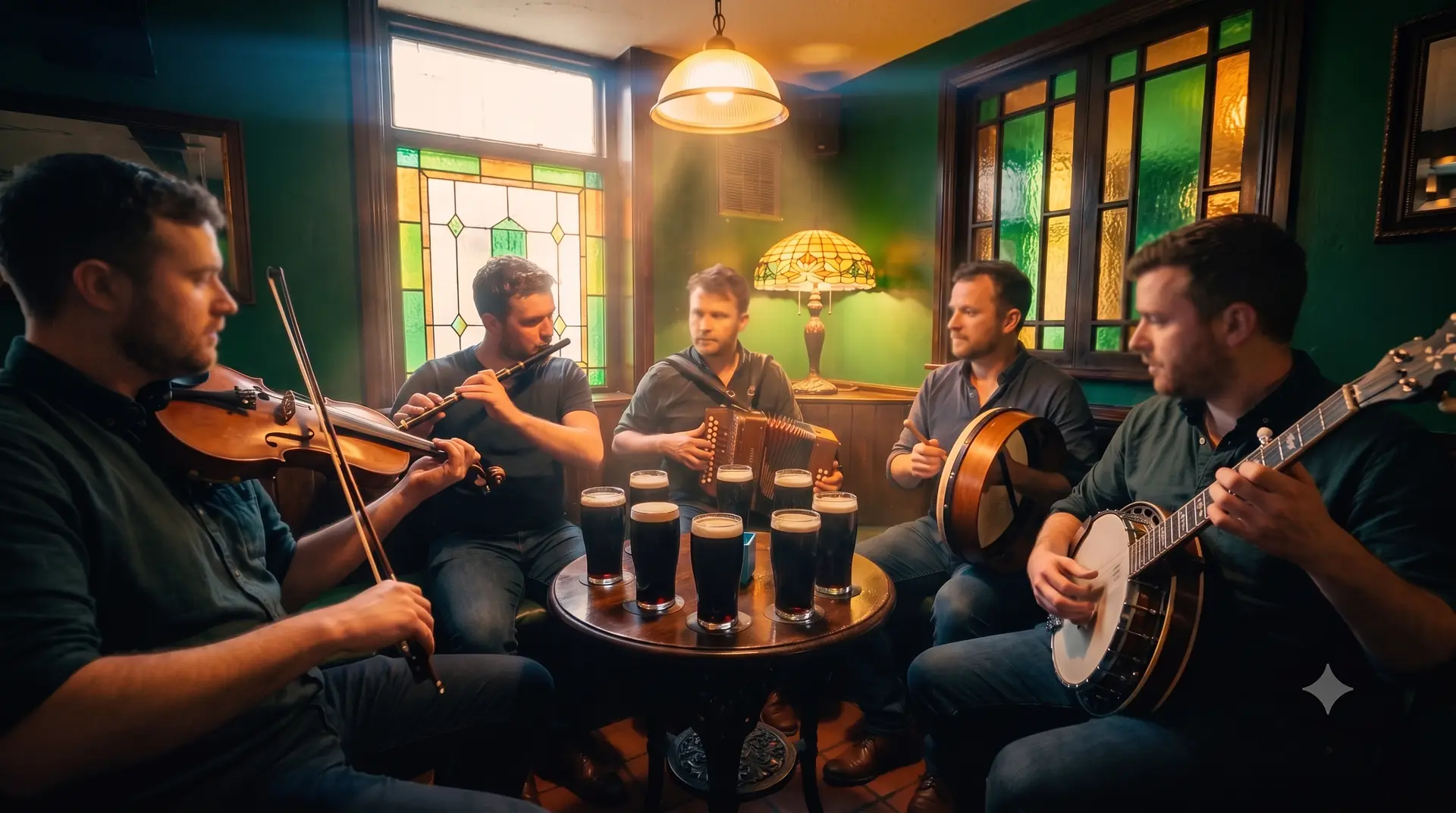
The trad session is a native species of the Irish pub, and at least one has naturalised as far as Mississippi. First thing: it's not a gig. No stage, no mic, no setlist, and nobody at that table is waiting for you to clap. Look for a handful of musicians round a small table, facing each other, not you. Nobody is in charge, except that somebody plainly is.
Around eight, a tune starts without being announced. Whoever knows it joins in, all on the one melody, mostly from memory. No harmony parts, no solos to speak of, no music stands; the table is for glasses. Fiddle, flute, whistle, the box, maybe a banjo, with a guitar or a bodhrán keeping time underneath. The tune goes round, usually three times, then on a nod you will not catch they slide into the next. Two or three like that make a set. Then everyone reaches for their pint at once, and a debate starts about what the second one was called. Nobody wins. Tunes collect names the way regulars collect nicknames.
They're dance tunes, jigs and reels mostly. A jig skips. A reel runs. Your foot will work out which before you do.
Learn the Call
Origins of the species
Plenty of the tunes are a couple of hundred years old, and nobody signed them. For most of that time they lived in kitchens, at house dances and at the crossroads, not in pubs. The point was the dancing.
Then dancing got complicated. In 1935 Ireland passed the Public Dance Halls Act, which put public dancing under licence, and the clergy, who had never cared for the unsupervised sort, took it from there. The house dance faded, helped along by emigration, the wireless and the parish hall, and a good many tunes had nowhere to live.
Some had already emigrated. In 1903 Francis O'Neill, chief of the Chicago police, published 1,850 of them in one book. He also recruited Irish musicians onto the force, still the best argument we know for learning a tune before a job interview.
The pub session turned up in London after the Second World War, when Irish emigrants, a long way from anybody's kitchen, went looking for each other. The usual story puts the first at the Devonshire Arms in Kentish Town, around 1946. Nobody danced. People sat and listened, which for dance music was a new idea.
A revival did the rest. Comhaltas Ceoltóirí Éireann got going in 1951, the year of the first Fleadh Cheoil, in Mullingar. In the 1960s Seán Ó Riada put a bodhrán in his group, Ceoltóirí Chualann, and the drum has had a chair at the table ever since. That makes it one of the younger regulars, and some nights it acts like it. The session went home to Ireland, then everywhere else, including, on Thursdays, East Fortification Street.
It isn't a jukebox. It's a conversation you're overhearing.
Behaviour
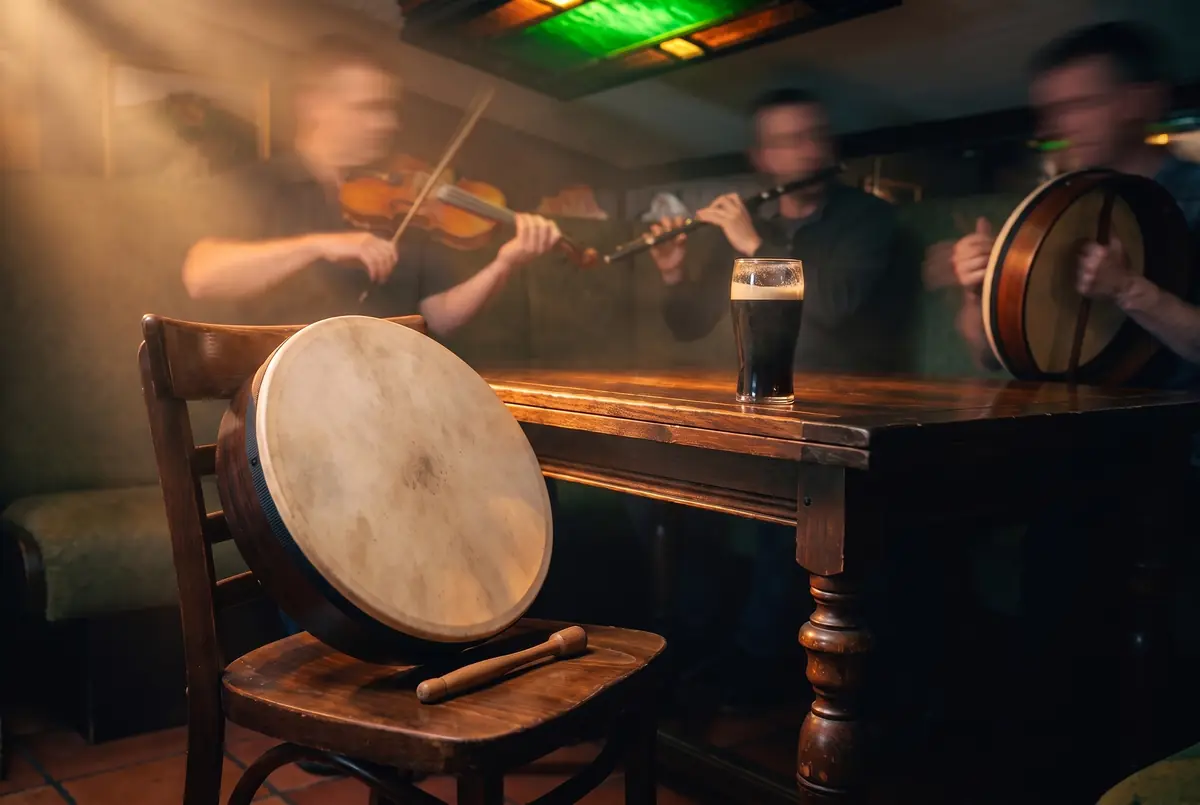
Sessions tolerate observers and are at their best with a few around. Sit near the table, not at it. The chairs belong to the players, even the empty ones; a chair with a drum on it means the drummer's at the bar.
Talk at pub volume, not match volume, and never over a song. When a singer starts, the room goes quiet, and anyone who hasn't noticed gets shushed until they do. Clap at the end of a set, not in the middle; the bodhrán has that covered. Don't bother with requests. It isn't a jukebox. It's a conversation you're overhearing. Phones down, and ask before you film.
If you play, bring it. Come early, listen for a set, and ask before you unpack. Play what you know and sit out what you don't. One bodhrán at a time is plenty, and the table will tell you so without saying a word. If you know a tune, you'll be asked to play it. That isn't a threat. It's a bit of a threat.
Symbiosis
The session and the pub evolved together. The musicians get a table, a chair each and a steady supply of pints, some of them bought by you. The pub gets a fuller room on a school night. One of nature's great arrangements, like the rhino and the little bird on its back. Biologists now reckon the bird's been drinking on the rhino's tab the whole time.
Now, our side of it. The session is a scheme. Step one: music, played by people better at something than anyone has a right to be on a Thursday. Step two: you stay for one more set. There is always one more set. Step three: it's nine o'clock, the kitchen's still on, and somehow you've ordered the pie. Step four: you buy the fiddler a pint, because you're a better person than you were at eight. Step five: repeat weekly. The ghost(s) have been on step five for years and have never once bought a round.
Our research department (Tomás, a coaster) has matched the tempo of the reels to the rate of repeat orders. Diabolical, when you lay it out: a warm room, something good to listen to, food, drink, a stranger to talk to. Somebody should stop us.
Habitat
Under the joke, then. We don't need you to spend a fortune. We need enough of you, on enough Thursdays, to keep the glass lit. The business plan doesn't have a second page.
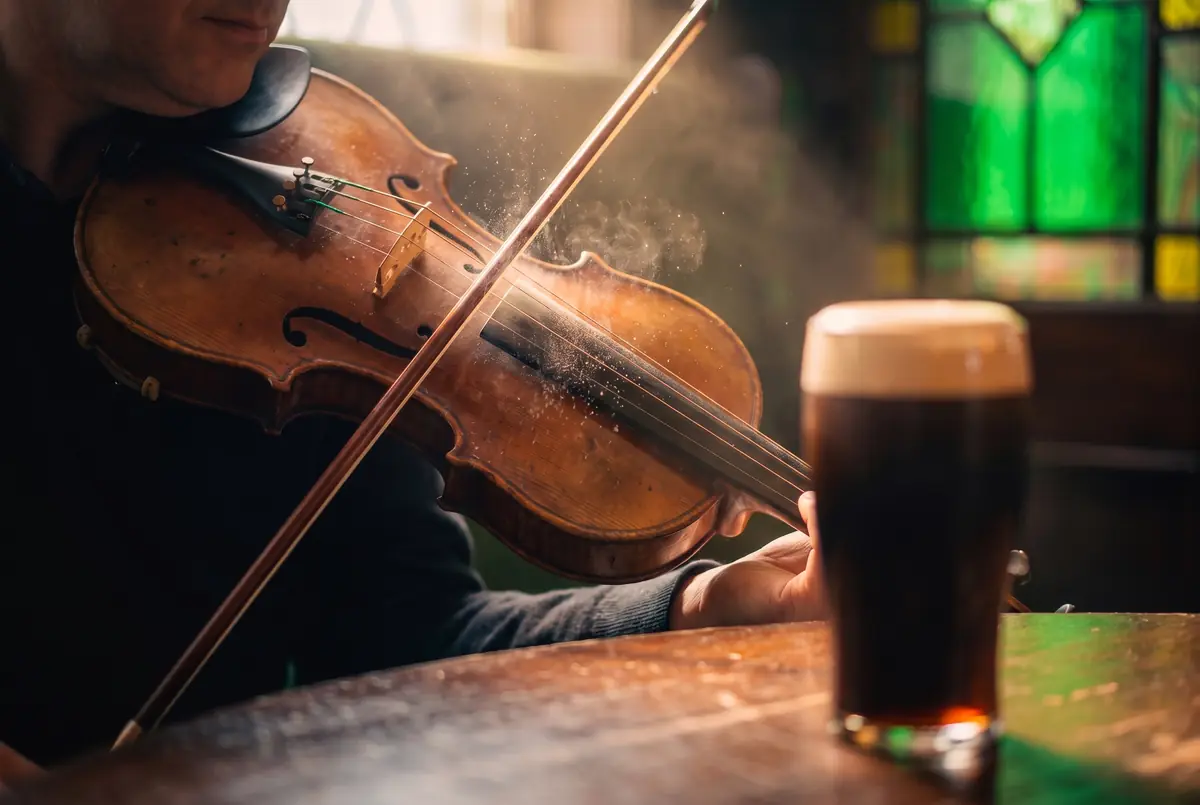
A pub is one of the last rooms that isn't your house, isn't your work and doesn't ask you for a reason. You don't have to be anywhere, or anyone. Rooms like this close all the time, quietly, on a weekday. We'd like this one open the night you need it.
So come on a Thursday. Come alone, or bring the friend who swears they can't stand folk music; give them till the third set. Nobody sits alone at a session for long. That part isn't a scheme. It's just what happens.
Thursdays at eight. The rest of the week is on the calendar, one lit night at a time.
See what's onBack to What's On
Follow the light on
The pub's the hub. Everything else is a spoke off it. Follow one, follow both, or just come in.
The glass at dusk, lamps just on. Room's gone self-aware again.
Friday's bar bets settled three arguments and started five.
Declan pouring the two-part pint. Don't rush him. 48 seconds.
Thursday session, full set, filmed from the corner.
The back room, online. Tunes before the session, teams before the quiz.